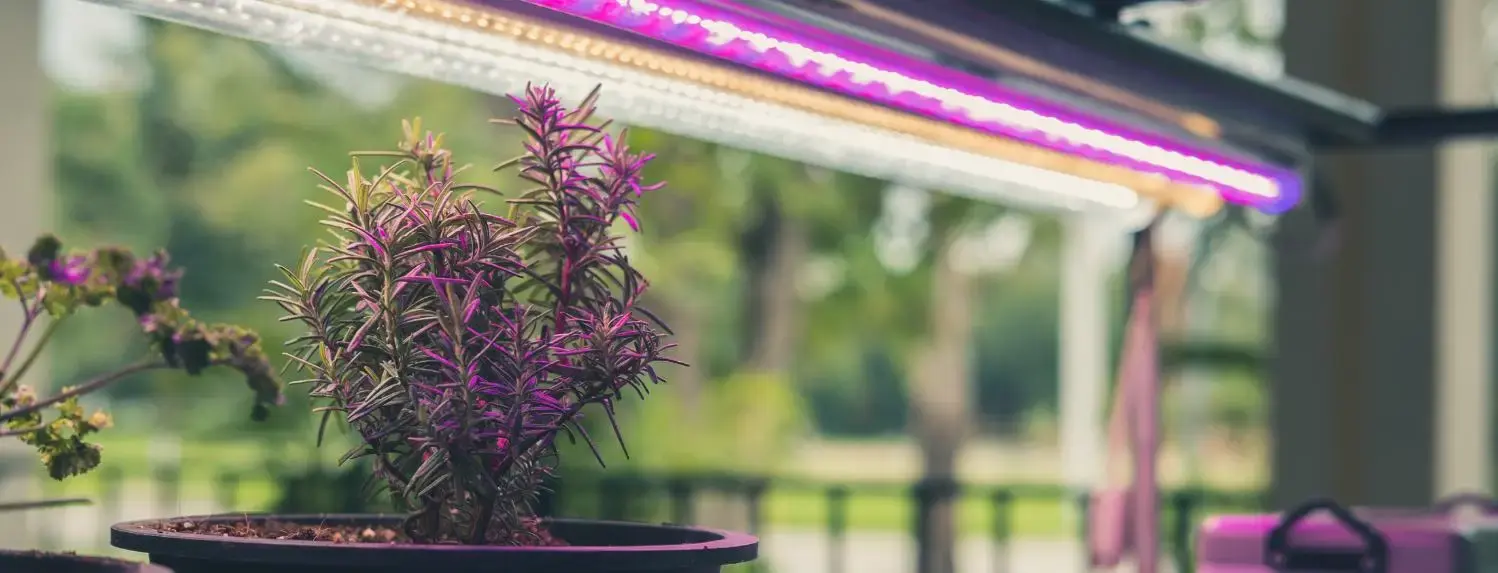


How do hydroponic grow kits work? At their core, they replace soil with a nutrient-rich water solution delivered straight to the plant's roots, inside a self-contained system that handles watering, feeding and often lighting for you. That makes them one of the easiest ways to start growing indoors, whether you're working with a windowsill, a spare room, or a dedicated grow tent. This guide walks through what's inside a typical kit, how the parts work together, the main system types you'll come across, and why so many beginner and experienced growers choose hydroponics over soil.
What's inside a hydroponic grow kit ⚙️
Most hydroponic grow kits bundle together the same core parts, though the exact mix depends on the system type and scale. Larger kits add pumps, timers and lighting; smaller beginner kits may rely on gravity and natural light instead.
| Component | Role | Status | Notes |
|---|---|---|---|
| Reservoir | Holds the nutrient solution | Core | Refilled or topped up as plants draw down water |
| Growing medium | Supports roots and holds moisture | Core | Rockwool, clay pebbles or coco coir; provides no nutrients itself |
| Nutrient solution | Delivers essential elements to roots | Core | A balanced mix dissolved in water, dosed to the crop and growth stage |
| Water pump | Circulates solution to the roots | Core in larger kits | Smaller passive kits may not need one |
| LED grow light | Powers photosynthesis indoors | Core for indoor kits | Not needed if the kit sits in strong natural light |
| Digital timer | Automates the light on/off cycle | Optional | Keeps photoperiods consistent without manual switching |
| pH tester | Measures solution acidity/alkalinity | Core | Critical for keeping nutrients available to the roots |
| Ventilation fan | Moves fresh air through the grow space | Optional | Prevents stagnant air and helps regulate humidity |
How the components work together 💧
A hydroponic grow kit is essentially a small, controlled feeding loop. The reservoir holds a nutrient solution that's pumped, dripped up to the growing medium, where plant roots take up water and nutrients directly rather than searching for them through soil. Because nutrients arrive dissolved and ready to absorb, plants typically don't have to work as hard to feed themselves, which is one reason hydroponic growth is often faster than soil-based growth under the same conditions.
Light drives the other half of the equation. Indoors, an LED grow light stands in for the sun, and a digital timer keeps the photoperiod — the daily balance of light and dark — consistent, which matters for healthy vegetative growth and for triggering flowering in photoperiod-sensitive plants.
Getting pH and nutrients right
💡 A-Grade Tip: Calibrate your pH tester regularly and check your nutrient solution every few days. Even a well-balanced nutrient mix becomes unavailable to the plant if pH drifts outside the optimal range, so consistent monitoring matters more in hydroponics than in soil, where the medium naturally buffers some of that drift.
Types of hydroponic systems used in grow kits 🌱
Most beginner and hobby kits are built around one of a handful of proven system types:
Deep Water Culture (DWC)
Roots hang directly in an oxygenated nutrient solution. Simple to set up and popular for beginners, though it relies on a reliable air pump to keep the solution oxygenated.
Nutrient Film Technique (NFT)
A thin, continuously flowing film of nutrient solution runs past the roots along a channel. Efficient for leafy greens and herbs, and widely used in larger or commercial-style kits.
Recirculating Systems
Rather than feeding on a timer, recirculating systems keep nutrient solution constantly moving past the roots, delivering a steady supply of nutrients and oxygen around the clock. In practice these are usually built as a combination of recirculating/DWC or recirculating/NFT — pairing DWC's oxygenated root zone or NFT's flowing nutrient film with continuous circulation. This tends to encourage particularly fast root growth, and day-to-day maintenance is largely limited to standard cleaning and topping up nutrient concentration as it depletes. or.
Benefits of growing with a hydroponic kit 📏
Hydroponic growing suits small and urban spaces particularly well, since it doesn't need a garden bed or large plot of land. Because the nutrient solution is recirculated rather than lost to runoff and evaporation, hydroponic systems also generally use less water than soil-based growing; peer-reviewed comparisons of hydroponic and soil-grown crops have found notably higher water use efficiency in hydroponic systems. Growing indoors under controlled light and temperature additionally allows for year-round cultivation regardless of outdoor season or weather, and a controlled environment tends to lower the risk of soil-borne pests and diseases reaching your plants.
💡 A-Grade Tip: If you're short on space, start with a compact DWC before scaling up to an NFT or recirculating system — it's an easier way to learn pH and nutrient management before adding pumps and timers into the mix.
Hydroponic grow kits take the guesswork out of indoor growing by handling feeding, watering and often lighting in one self-contained system. Once you understand how the reservoir, growing medium, nutrient solution and light cycle work together, choosing between a DWC, NFT, or Recirculating kit kit comes down to your space and how hands-on you want to be. Browse A-Grade Hydroponics' full range of grow kits and packages, or get in touch with our Melbourne team if you'd like help picking the right one to start with.